
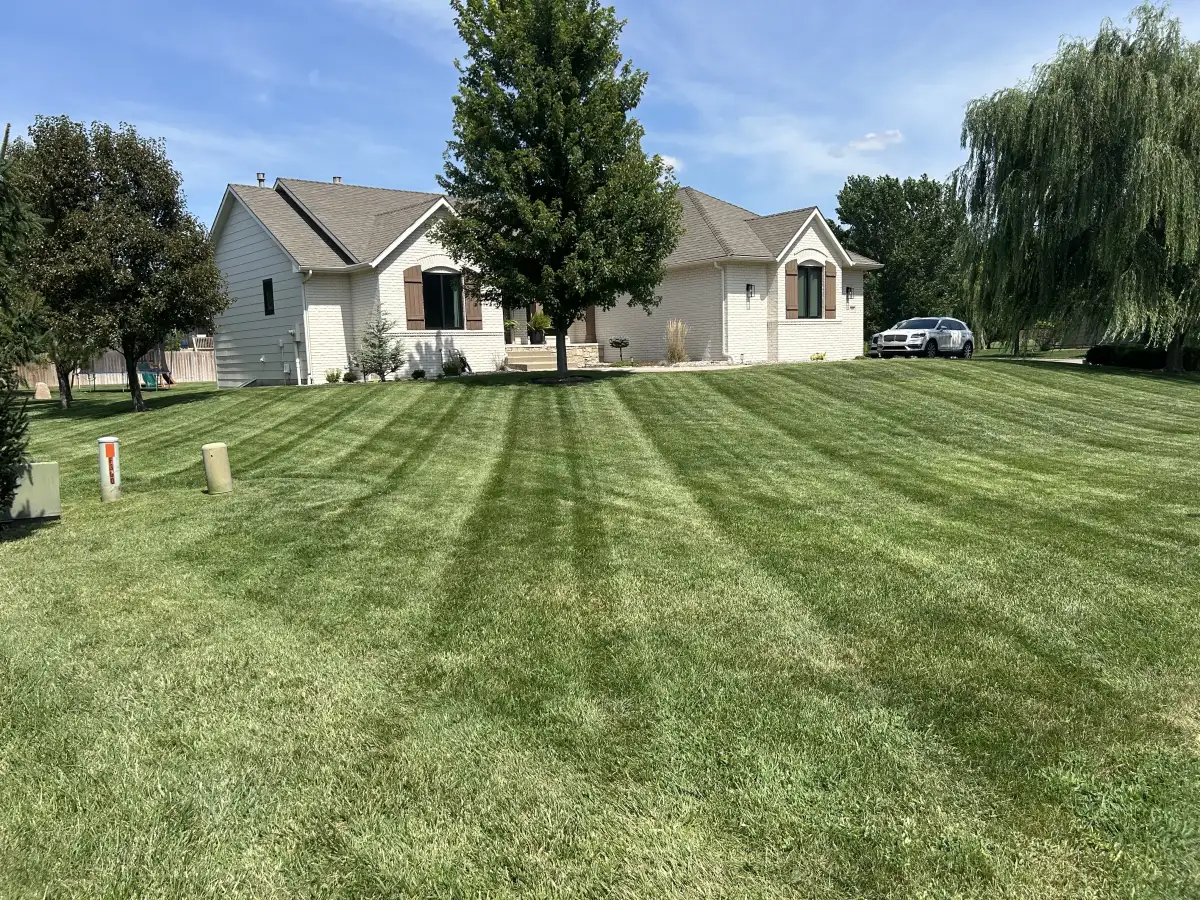
Booking lawn care should begin with a shared definition of the work. A homeowner may mean mowing when asking for “lawn care,” while the lawn may also show weeds, thin turf, compacted areas, uneven watering, or low spots that stay wet. Those needs do not belong in one vague line item.
For Wichita properties, the plan also has to adapt as growth and weather change. A wet, fast-growing stretch can create a different mowing need than a hot, windy period. These questions will help you compare the actual scope behind an estimate and decide whether you need routine Wichita lawn mowing or a broader lawn care program.
“Keep the lawn consistently neat,” “reduce weeds,” “repair thin areas,” and “solve the dry strip by the driveway” are different goals. Naming the priority helps the provider separate routine maintenance from turf, irrigation, or drainage work.
1. Which Parts of My Property Are Included?
Clarify the serviceable areas before comparing prices. Front and back lawns may be obvious, but side yards, fenced areas, strips outside a fence, steep banks, drainage swales, or grass beyond a detached building can be missed in a quick conversation. Gates and narrow access can also affect which equipment can reach an area.
Ask the estimate to identify the lawn areas included and any areas excluded. If you have landscape beds, trees, or shrubs that need attention, confirm whether those are part of the request or a separate landscaping service. A precise property scope prevents both missed work and assumptions.
2. What Happens During a Standard Visit?
Ask what “mowing” means in the proposed service. A useful scope should address cutting, string trimming around fixed obstacles, edging expectations, and cleanup of clippings from hard surfaces. It should also explain how heavy growth or a delayed first visit is handled.
Then ask what is not included. Weed control, fertilization, leaf removal, shrub trimming, bed maintenance, aeration, and sprinkler work are separate needs unless the written plan says otherwise. Comparing the same tasks is more useful than comparing two visit prices with different responsibilities.
3. What Property Details Affect the Estimate?
Lawn size is only one part of pricing. Current height and condition, visit frequency, the amount of trimming and edging, obstacles, slopes, gates, cleanup, and first-visit work can all affect the time and equipment involved. That is why an online average—or a monthly figure without context—cannot tell you whether a quote fits your lawn.
Ask whether the estimate assumes recurring service or a one-time visit, how many visits it covers, and whether the first visit has a different scope. If additional services are recommended, request separate descriptions so you can see which work maintains appearance and which work addresses a specific turf problem.
4. How Will Mowing Frequency Respond to Growth?
A fixed calendar does not make grass grow at a fixed rate. Wichita lawns can move through faster spring growth, summer heat and wind, dry stretches, and periods of heavy rain. Grass type, shade, available moisture, and the intended cutting height also affect how soon another mow is appropriate.
This is where the common one-third rule is useful: avoid removing more than about one-third of the grass blade in one cut. The guideline connects mowing height with timing. If the lawn grows past the planned height, cutting it extremely short is not the same as restoring it carefully. Ask how the schedule and cut will be adjusted when conditions change.
5. Are We Looking at a Mowing Issue or a Lawn Health Issue?
A clean cut improves appearance, but it cannot correct every problem. Recurring weeds may call for a targeted lawn treatment. Thin turf in hard, heavily used areas may be connected to soil compaction and could be worth reviewing for aeration or seeding. Dry bands can point to uneven sprinkler coverage, while persistently soft or wet areas can indicate a yard drainage concern.
Walk the property and note where symptoms start, whether they change after irrigation or rain, and whether the same problem returns. Those observations help keep a mowing estimate from being treated as a promise to solve an unrelated water, soil, or weed problem.
6. How Do Access, Weather, and Property Use Affect Service?
Good lawn service depends on predictable access. Tell the provider about locked gates, narrow passages, pets, play equipment, irrigation heads, landscape lighting, low branches, steep ground, and regular times when the yard is in use. Ask what should be moved before a visit and how access changes should be communicated.
Weather matters, too. Wet soil and saturated turf may not support normal equipment without rutting or compaction, and storms can shift a route. Ask how weather delays are communicated and what happens next. If fertilization or another application is part of the plan, follow the service-specific preparation, watering, and access instructions you receive.
7. What Will Ongoing Communication Look Like?
Before booking, know how schedule changes, gate issues, unusual growth, or newly noticed lawn problems will be handled. A defined point of contact and a clear method for requesting added work can keep routine service from drifting beyond the original scope.
You should also know when a concern needs a separate review. A provider can maintain the agreed lawn areas while still identifying that a sprinkler, weed, drainage, or turf-repair issue requires a different decision. Compare local services, estimate factors, and next steps on the Wichita lawn care page.
Share the property address, areas to be serviced, last mowing date, current lawn condition, desired frequency, known weed or water concerns, and access notes for gates, pets, slopes, or narrow side yards.
Frequently Asked Questions
How much does lawn care cost in Wichita?
Lawn care does not have one dependable price for every Wichita property. Lawn size, current growth, access, obstacles, trimming and edging, visit frequency, cleanup, and any separate turf or seasonal services can all affect an estimate. Ask for a written scope so you know what the number includes.
What should a lawn mowing estimate include?
A useful estimate should identify the areas to be mowed, expected frequency, trimming and edging responsibilities, hard-surface cleanup, access needs, and any different scope for the first visit. It should also separate services such as weed control, fertilization, aeration, seeding, irrigation, or drainage work when they are not included.
What is the one-third rule for mowing?
The one-third rule is a common guideline to avoid removing more than about one-third of the grass blade in one mowing. It helps explain why cutting an overgrown lawn extremely short can stress the turf and why visit frequency should respond to actual growth.
How often should a Wichita lawn be mowed?
There is no single interval that fits every lawn or every month. Grass type, growth rate, rain, heat, available moisture, shade, and the intended mowing height all matter. Ask how the schedule can respond when spring growth accelerates or hot, dry weather slows it.
Can mowing fix weeds, thin turf, or brown patches?
Mowing can improve appearance, but it does not solve every turf problem. Widespread weeds, compacted soil, thin areas, uneven sprinkler coverage, or standing water may require a separate review and a different service.
What should I share before requesting lawn care service?
Share the property address, the areas you want serviced, the lawn's current condition, your last service date, desired frequency, known weeds or water concerns, and access details such as gates, pets, slopes, or narrow side yards.
Request a Lawn Care Estimate in Wichita
Prestige Lawn Care serves residential and commercial properties in Wichita and communities across the existing service area. Tell us what you want maintained, what concerns you have noticed, and whether you are looking for recurring care or a one-time improvement.
Request a free estimate through the contact page or call (316) 669‑4125 to discuss your property.