Summer Mowing Height Guide for Wichita, KS
The ideal mowing height for most Wichita lawns during summer is 3.5 to 4 inches. Cutting your grass at this height through June, July, and August shades the soil, keeps roots cooler, and helps your lawn retain moisture during the hottest stretch of the Kansas growing season. Mowing too short -- a mistake called scalping -- exposes the soil to direct sun, accelerates moisture loss, and invites crabgrass and other weeds to take over bare spots.
This guide covers the correct summer mowing height for every grass type found in the Wichita metro area, explains why taller grass performs better in Kansas heat, and walks through the mowing practices that make the biggest difference between a lawn that survives summer and one that thrives through it.
Why Mowing Height Matters More in Summer
During spring, your lawn is actively growing and temperatures are mild. Mowing height is still important, but the margin for error is wider because the grass recovers quickly. Summer changes the equation completely.
In Wichita, summer daytime temperatures regularly exceed 95 degrees, and soil surface temperatures can reach 130 degrees or higher in direct sun. The taller your grass, the more shade it casts on the soil surface. That shade can reduce soil temperature by 10 to 15 degrees compared to a closely mowed lawn, which directly translates to slower moisture evaporation and less heat stress on the root system.
Taller grass also means deeper roots. Research from Kansas State University's Department of Horticulture shows a direct correlation between blade height and root depth in cool-season grasses. A lawn mowed at 4 inches will develop roots 30 to 50 percent deeper than the same lawn mowed at 2 inches. Deeper roots access moisture that shallow-rooted, closely cropped grass simply cannot reach during dry periods.
This is why professional lawn mowing services in the Wichita area raise their cutting decks as summer approaches. It is not laziness or letting the lawn go -- it is the single most effective thing you can do to protect your turf from summer heat stress.
Recommended Summer Mowing Heights by Grass Type
Most residential lawns across Wichita, Andover, Derby, Rose Hill, and the surrounding communities are planted with one of three grass types. Here is the correct summer mowing height for each:
Tall Fescue
Tall fescue is the most common grass type in the Wichita metro and throughout Sedgwick and Butler counties. It is a cool-season grass that handles Kansas summers reasonably well as long as it receives adequate water and is not cut too short.
- Summer mowing height: 3.5 to 4 inches
- Spring and fall height: 3 to 3.5 inches
- Never cut below: 3 inches during any season
Tall fescue's deep root structure gives it good drought tolerance for a cool-season grass, but only when mowed at the proper height. Scalping tall fescue in summer almost guarantees brown patches within two weeks, even with regular watering.
Kentucky Bluegrass
Kentucky bluegrass is popular in newer subdivisions and irrigated lawns across the Wichita metro. It produces a dense, fine-textured lawn but is more sensitive to heat and drought than tall fescue.
- Summer mowing height: 3 to 3.5 inches
- Spring and fall height: 2.5 to 3 inches
- Never cut below: 2.5 inches during any season
If your lawn is a Kentucky bluegrass or fescue-bluegrass blend, consistent irrigation is essential during summer months. Bluegrass will go dormant and turn brown during extended dry periods, but it typically recovers in fall if the crowns were not killed by extreme heat. Keeping the mowing height up gives it the best chance of staying green without going dormant.
Bermuda Grass
Some properties in the Wichita area, particularly in the southern and western parts of the metro, have bermuda grass or bermuda-fescue transition zones. Bermuda is a warm-season grass that actually thrives in summer heat.
- Summer mowing height: 1.5 to 2.5 inches
- Spring and fall height: 1 to 2 inches
- Never cut below: 1 inch without a reel mower
Bermuda grass is the exception to the "mow high in summer" rule. It is a low-growing grass that actually performs better when mowed shorter and more frequently. However, the heights listed above still apply to rotary mowers, which is what most homeowners use. If you have bermuda grass, mowing twice a week during peak summer growth produces the best results.
The One-Third Rule: Why It Matters Most in Summer
No matter what grass type you have, the one-third rule is critical during summer. Never remove more than one-third of the grass blade in a single mowing. If your target height is 4 inches, you should mow before the grass reaches 6 inches.
In practice, this means most Wichita lawns need weekly mowing from May through September. Letting the lawn go two or three weeks between cuts and then hacking it down to the desired height is one of the fastest ways to damage cool-season grass in summer. The sudden loss of leaf surface shocks the plant, reduces its ability to photosynthesize, and exposes the lower stems and soil to intense sun they were not acclimated to.
If you do fall behind and the grass gets tall, raise the mowing deck and cut off only one-third. Then wait three to four days and cut again. It may take two or three passes over a week to bring an overgrown lawn back to the proper height without stressing the grass.
Summer Mowing Best Practices for Wichita Lawns
Beyond setting the right height, these practices make a significant difference in how your lawn handles Kansas summer heat.
Sharpen Mower Blades Every 8 to 10 Hours of Use
Dull blades tear grass instead of cutting it cleanly. Torn grass tips turn white or brown within a day, giving the entire lawn a dull, grayish appearance. More importantly, ragged cuts create larger wound surfaces that lose moisture faster and are more susceptible to fungal disease. In the humid summer conditions common across the Wichita metro, this can lead to brown patch or dollar spot fungus.
Most homeowners should sharpen their mower blades every three to four weeks during the active mowing season. If you hit rocks, sticks, or other debris regularly, sharpen more often.
Mow in the Evening or Early Morning
The best time to mow your lawn in summer is between 6 AM and 9 AM, or between 5 PM and 7 PM. Mowing during the heat of the day (11 AM to 3 PM) adds stress to grass that is already working hard to manage heat and moisture. Freshly cut grass loses water rapidly through the cut tips, and if that happens during peak afternoon temperatures, the moisture loss can push already-stressed turf past its tolerance point.
Morning mowing is generally preferred because it gives the grass blades the full day to heal before the cooler, potentially dew-heavy overnight hours. Wet grass at night combined with fresh wounds is the recipe for fungal disease.
Leave the Clippings
Grass clippings from a properly maintained lawn (mowed weekly, one-third rule followed) are small enough to decompose quickly and return valuable nitrogen to the soil. Research shows that leaving clippings can reduce your fertilization needs by up to 25 percent over a season.
Clippings do not cause thatch buildup. Thatch is formed by roots, stolons, and other woody plant material, not by grass blade clippings. The only time you should bag clippings is if the lawn is excessively overgrown and the clumps are thick enough to smother the grass beneath them.
Alternate Mowing Patterns
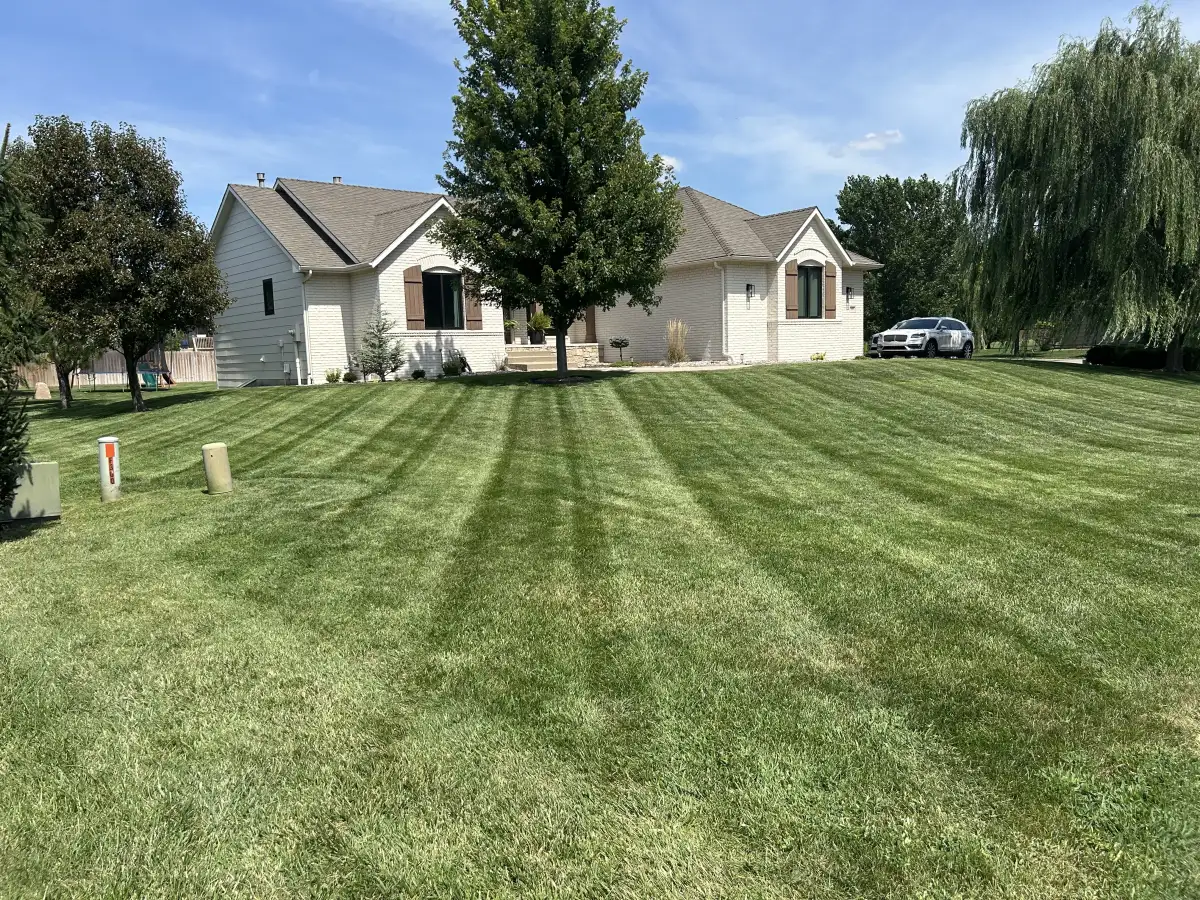
Mowing the same direction every week creates ruts in the soil and causes the grass blades to lean permanently in one direction, leading to uneven growth. Alternate between north-south, east-west, and diagonal patterns each week. This encourages upright growth, reduces soil compaction from the mower wheels, and produces a more uniform appearance. You will also notice better mowing stripes when you change direction regularly.
Signs You Are Mowing Too Short
Watch for these indicators that your mowing height needs to come up:
- Brown tips appearing within a day of mowing. This means the blades are being torn (dull blade) or cut too aggressively (too short).
- Rapid weed emergence in previously clean areas. When grass is cut short, sunlight reaches the soil and stimulates weed seed germination. Crabgrass is especially aggressive in thin, short-mowed lawns.
- Lawn needs watering more frequently than every two to three days. Short grass exposes soil to sun, accelerating evaporation. If your sprinkler system is running correctly but the lawn still looks dry, the mowing height is likely the issue.
- Visible soil between grass plants. Healthy, properly mowed turf should form a dense canopy that completely covers the soil surface.
- Lawn goes dormant earlier than neighbors. If your lawn turns brown in June while adjacent properties are still green, mowing height is the most likely culprit, assuming similar watering schedules.
How Mowing Height Connects to Other Summer Lawn Care
Mowing height does not exist in isolation. It directly affects how well every other part of your lawn care program works.
Fertilization and weed control applications perform better on properly mowed turf. A dense, tall canopy reduces weed seed germination naturally, which means your pre-emergent and post-emergent herbicides have less work to do. Fertilizer reaches the root zone more effectively when the soil is shaded and moist rather than baked and compacted.
Irrigation efficiency improves dramatically with taller grass. A lawn mowed at 4 inches retains soil moisture significantly longer than one mowed at 2 inches. This means you can water less frequently while getting the same results, which saves money on your utility bill and reduces wear on your sprinkler system.
Even bed maintenance benefits from proper mowing height. When the lawn surrounding your garden beds is thick and healthy, grass does a better job of staying in its lane and not creeping into mulched areas. Thin, stressed turf is more likely to develop bare spots along bed edges that look untidy and require more frequent edging.
Get Professional Mowing for Your Wichita Lawn
Setting the right mowing height is the foundation of a lawn that stays green and healthy through a Wichita summer. But it takes consistency -- the right height, every week, with sharp blades and clean technique. If you would rather spend your summer weekends doing something other than pushing a mower in 100-degree heat, Prestige Lawn Care handles it all.
We provide professional lawn mowing service across the entire Wichita metro area, including Andover, Derby, Rose Hill, Augusta, Maize, Goddard, Bel Aire, and Haysville. Every visit includes precision mowing at the correct seasonal height for your grass type, clean edging, trimming, and blowing.
Ready to hand off the mowing this summer? Request a free estimate or call (316) 669-4125 to get started.