
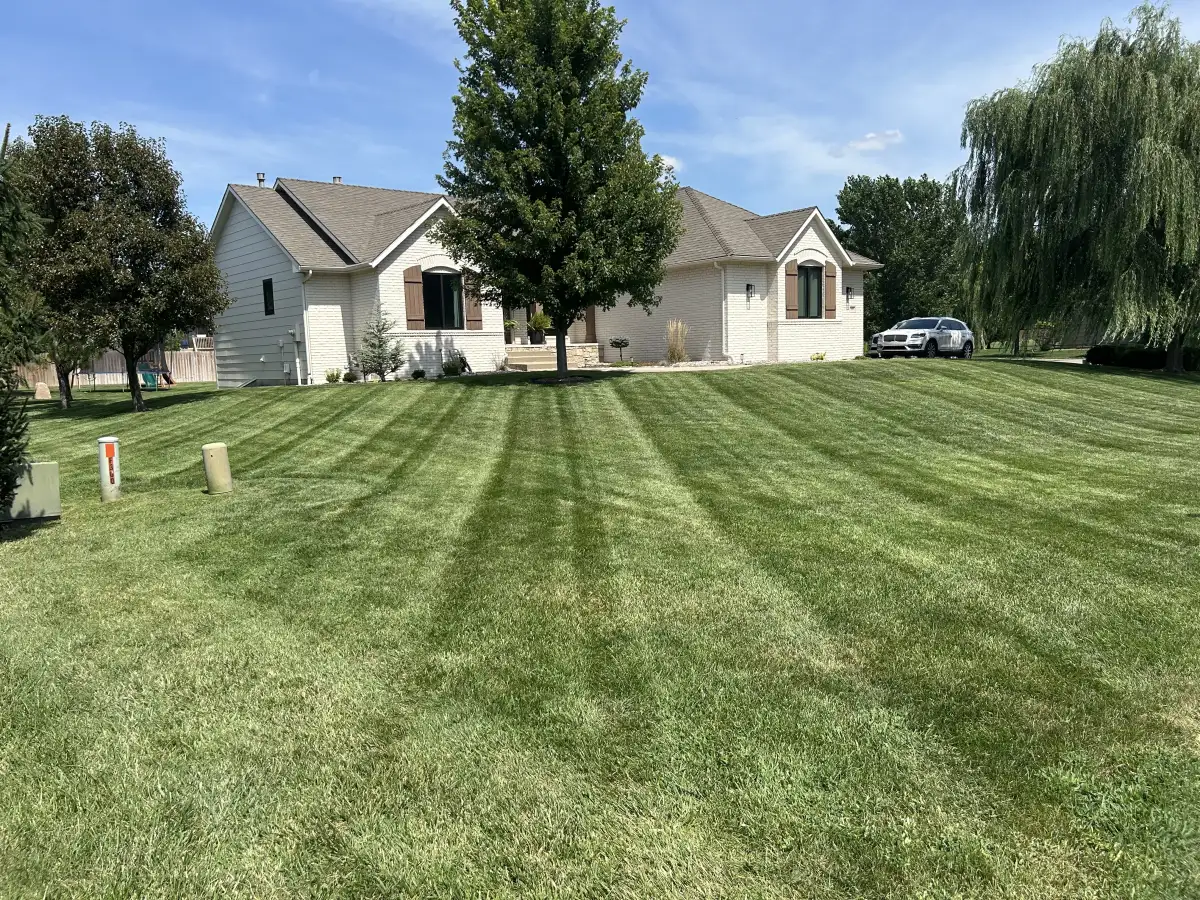
Summer Lawn Watering Guide for Wichita, KS: Schedules, Tips & Drought Strategies
Summer in Wichita means temperatures regularly above 95 degrees, stretches without rain that can last two or three weeks, and afternoon winds that pull moisture out of soil faster than most homeowners realize. Under these conditions, how and when you water your lawn makes the difference between a yard that stays green through August and one that turns brown by the Fourth of July.
This guide covers everything Wichita-area homeowners need to know about summer lawn watering, from irrigation schedules and sprinkler system maintenance to drought survival strategies. Whether you have Bermuda grass, fescue, zoysia, or buffalo grass, the principles below will help you water smarter and keep your lawn healthy without wasting water or running up your utility bill.
How Much Water Your Lawn Actually Needs
The standard recommendation for Kansas lawns is 1 to 1.5 inches of water per week during the summer growing season. That number accounts for both rainfall and irrigation. In a week where Wichita gets three-quarters of an inch of rain, you only need to supplement with another half to three-quarters of an inch from your sprinkler system.
Different grass types have different water needs:
- Bermuda grass: The most drought-tolerant warm-season grass common in Wichita. Bermuda thrives on 1 inch per week and can survive on less by going semi-dormant. It recovers quickly once water returns.
- Zoysia grass: Slightly higher water needs than Bermuda at 1 to 1.25 inches per week. Zoysia's dense growth habit helps it retain soil moisture better than most grasses.
- Tall fescue: The most common cool-season grass in the Wichita metro. Fescue needs 1.25 to 1.5 inches per week during summer and struggles most during July and August when heat stress compounds water demand.
- Buffalo grass: Native to Kansas and extremely drought-tolerant. Buffalo grass can survive on natural rainfall alone in most years, though supplemental watering during extended dry spells keeps it looking better.
The key principle is depth over frequency. One inch of water applied in two deep sessions penetrates 6 to 8 inches into the soil, encouraging roots to grow downward toward consistent moisture. The same inch split into seven daily light waterings barely wets the top inch of soil, training roots to stay shallow where they are most vulnerable to heat and drought.
The Best Watering Schedule for Wichita Summers
Timing your irrigation correctly can improve water efficiency by 20 to 30 percent with zero additional cost. The optimal watering window for Wichita lawns is between 4 AM and 9 AM.
Why Early Morning Works Best
Wind speeds are lowest in the early morning hours, meaning water goes where your sprinkler heads aim it rather than drifting across driveways and sidewalks. Temperatures are cooler, reducing evaporation losses. And grass blades dry quickly once the sun comes up, which prevents the damp overnight conditions that fuel fungal diseases like brown patch, a common problem in Kansas lawns during humid summer stretches.
Avoid Midday and Evening Watering
Watering between 10 AM and 4 PM wastes significant water to evaporation. On a 100-degree Wichita afternoon with 15 mph winds, you can lose 30 percent or more of your irrigation water before it ever reaches the root zone. Evening watering after 6 PM keeps grass blades wet for 10 to 12 hours overnight, creating ideal conditions for fungal growth. If your schedule makes morning watering difficult, late afternoon between 4 PM and 6 PM is an acceptable compromise.
A Sample Weekly Schedule
For most Wichita lawns with in-ground sprinkler systems, this schedule works well during peak summer heat:
- Bermuda and zoysia: Water Tuesday and Friday mornings, running each zone long enough to deliver half an inch per session (approximately 20 to 30 minutes per zone for most rotary head systems). Add a third session on Sunday during extreme heat weeks above 100 degrees.
- Tall fescue: Water Monday, Wednesday, and Friday mornings. Fescue needs more frequent watering because its root system is shallower than warm-season grasses. Run each zone for the same duration to deliver approximately half an inch per session.
- Buffalo grass: Water once per week unless temperatures exceed 100 degrees for multiple consecutive days. Buffalo grass prefers deep, infrequent watering that mimics natural Kansas rainfall patterns.
Sprinkler System Maintenance for Summer
A sprinkler system that is not running efficiently wastes water, creates dry spots, and can actually damage your lawn by overwatering some areas while leaving others parched. Before summer heat arrives, take 30 minutes to check these items on your system.
Check for Clogged or Misaligned Heads
Run each zone manually and watch every head. Look for heads that are not popping up fully, spraying in the wrong direction, or producing a weak, sputtering pattern. Clogged nozzles are common after spring startup because sediment settles in the lines over winter. Most clogged nozzles can be cleaned with a pin or replaced for under two dollars each.
Test for Even Coverage
Place five or six tuna cans or similar straight-sided containers across each zone. Run the zone for 15 minutes, then measure the water depth in each container. The difference between the highest and lowest measurements should be less than half an inch. Larger variations indicate heads that need repositioning, nozzle changes, or pressure adjustment.
Inspect for Leaks
Walk your yard while the system runs and check for unusually wet or soggy areas, especially around valve boxes and pipe connections. Small leaks waste significant water over a full summer season and can cause drainage problems in your yard. A steady drip at one gallon per hour adds up to over 2,000 gallons wasted by the end of summer.
Signs Your Lawn Needs Water
Rather than watering on a rigid schedule regardless of conditions, learn to read your lawn. These visual cues tell you when your grass is beginning to stress from lack of water.
- Footprint test: Walk across your lawn. If the grass springs back up within a few seconds, it has adequate moisture. If your footprints stay visible for more than 30 seconds, the grass is losing turgor pressure and needs water soon.
- Color shift: Healthy grass is bright green. The first sign of water stress is a blue-gray or dull green color, particularly visible in the late afternoon. By the time grass turns yellow or brown, it has been stressed for several days.
- Blade curl: Grass blades fold or roll lengthwise to reduce their surface area and conserve moisture. This is especially visible in fescue lawns and is a clear signal to water within 24 hours.
- Soil probe test: Push a screwdriver or soil probe into the ground. If it slides in easily to 6 inches, moisture levels are adequate. If the soil is hard and resistant, it is too dry.
Drought Strategies for Kansas Summers
Wichita is no stranger to drought. When the city issues water restrictions or when extended dry periods make conservation a priority, these strategies help your lawn survive with less water.
Raise Your Mowing Height
During drought conditions, set your mower height to the upper range for your grass type. Taller grass shades the soil surface, reducing evaporation and keeping root zones cooler. For Bermuda, that means 2.5 to 3 inches instead of the usual 1.5 to 2 inches. For fescue, raise to 3.5 to 4 inches.
Let Warm-Season Grasses Go Dormant
Bermuda and buffalo grass are adapted to Kansas drought. When water is scarce, they enter a natural dormancy, turning brown but remaining alive at the crown and root level. A dormant Bermuda lawn recovers fully within two to three weeks of consistent rainfall or irrigation. Fighting dormancy with insufficient water is the worst strategy because it stresses the plant without giving it enough moisture to stay actively growing.
Prioritize Trees and Shrubs
If water is limited, direct it toward established trees and shrubs first. A mature shade tree adds thousands of dollars to your property value and takes decades to replace. Your lawn can be restored in a single growing season. During severe drought, a slow drip at the base of trees for 2 to 3 hours every two weeks keeps root systems alive even when the surrounding lawn has gone dormant.
Avoid Fertilizing During Drought
Fertilizer stimulates growth, which increases water demand. Applying fertilizer during a drought pushes your grass to grow when it cannot get the water it needs, causing more harm than good. Wait until consistent moisture returns before resuming your fertilization program.
Common Watering Mistakes Wichita Homeowners Make
After maintaining lawns across the Wichita metro for years, these are the watering mistakes we see most frequently in Rose Hill, Andover, Derby, Augusta, and the surrounding area.
- Watering every day for 10 minutes: This is the most common and most damaging mistake. Short daily watering creates shallow roots that cannot survive even brief dry periods. Water deeply and less frequently instead.
- Ignoring rain: If your sprinkler system does not have a rain sensor, install one. Running your irrigation the morning after a half-inch rain event wastes water and can oversaturate your soil. Rain sensors cost under $30 and save their price in a single month.
- Watering the sidewalk: Sprinkler heads that spray onto concrete waste water and can create slippery surfaces. Adjust heads annually to ensure coverage stays on your lawn and landscape beds.
- Not adjusting for seasons: A July watering schedule is too much for May and September. Reduce run times by 25 to 30 percent in spring and fall when temperatures are lower and evaporation rates drop.
- Overwatering shady areas: Shaded portions of your lawn need 30 to 50 percent less water than sunny areas. If your sprinkler system treats the entire yard the same, you are overwatering under trees and underwatering in full sun. Zone your system to match exposure.
Frequently Asked Questions
How often should I water my lawn in Wichita during summer?
Most Wichita lawns need 1 to 1.5 inches of water per week during summer. For warm-season grasses like Bermuda and zoysia, two to three deep watering sessions per week is more effective than daily light watering. Cool-season fescue may need three sessions per week during peak heat.
What is the best time of day to water my lawn in Kansas?
Water between 4 AM and 9 AM. Early morning watering allows grass blades to dry before nightfall, reducing the risk of fungal diseases. Midday watering loses up to 30 percent of water to evaporation in the Wichita heat. Evening watering keeps grass wet overnight, promoting disease.
How do I know if my sprinkler system is watering evenly?
Place five or six straight-sided containers like tuna cans across your lawn within a sprinkler zone. Run the system for 15 minutes, then measure the water depth in each container. If the difference between the highest and lowest container exceeds half an inch, your sprinkler heads need adjustment or replacement.
Should I water my lawn during a Wichita drought or water restriction?
Follow all city water restrictions. Warm-season grasses like Bermuda can survive extended drought by going dormant and will recover when rain returns. Cool-season fescue is less drought-tolerant and may need supplemental watering within restriction guidelines to survive. Focus available water on trees and established shrubs first.
Keep Your Lawn Green This Summer
Proper watering is just one part of a comprehensive lawn care program. Combined with correct mowing heights, seasonal fertilization, and regular maintenance, smart irrigation keeps your Wichita lawn looking its best even through the toughest Kansas summers.
Prestige Lawn Care provides full-service lawn care and irrigation services throughout the Wichita metro area, including Rose Hill, Andover, Derby, Augusta, Maize, Goddard, and all surrounding communities.
Need help with your sprinkler system or lawn care? Request a free quote or call (316) 669-4125 today.