
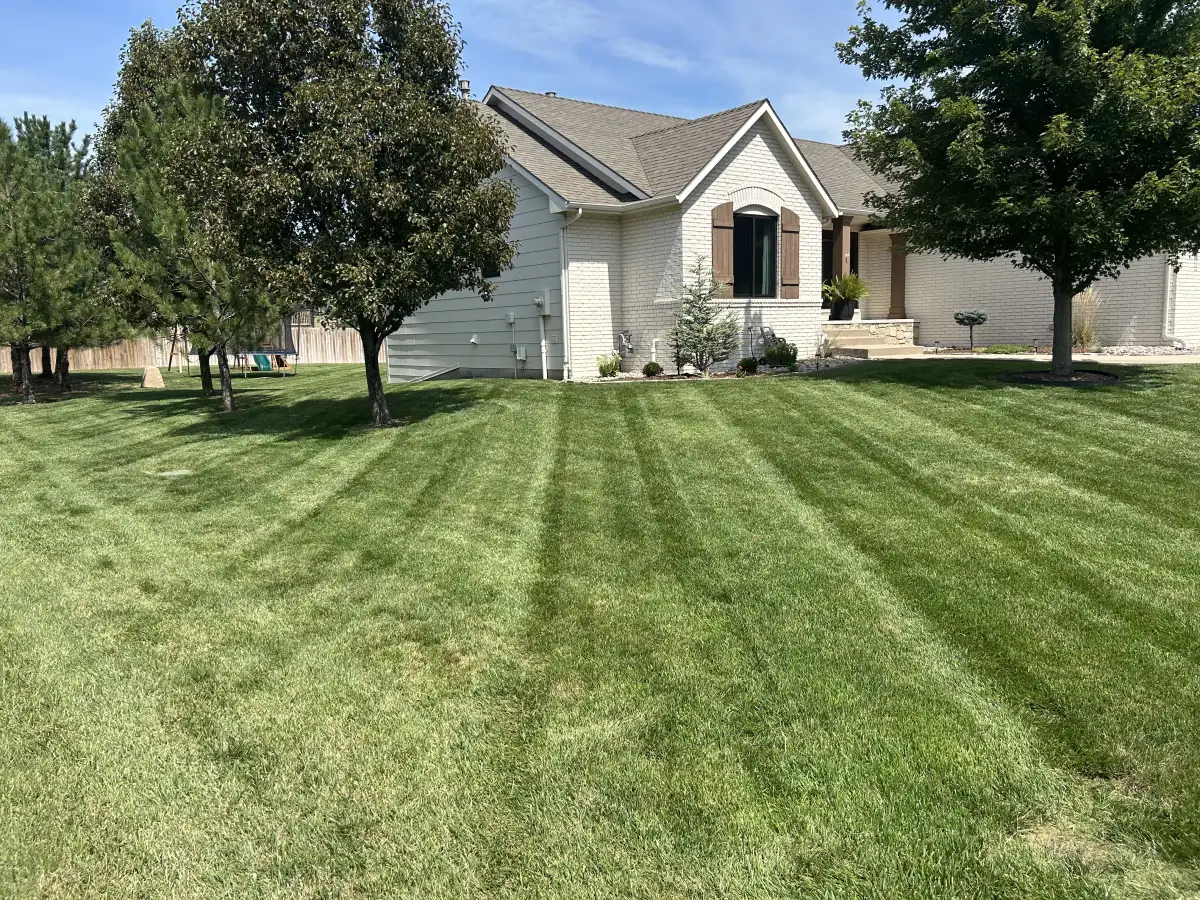
Lawn Fertilization in Wichita, KS
Timed fertilizer programs that feed your lawn when it needs it most — building thicker turf, deeper roots, and greener color through every Kansas season.
Why Fertilization Matters for Wichita Lawns
Kansas cool-season grasses — tall fescue, Kentucky bluegrass, and perennial ryegrass — need consistent nutrition to stay thick and competitive against weeds. Without regular feeding, turf thins out, loses color, and becomes vulnerable to disease, drought stress, and weed invasion. A properly fertilized lawn is not just greener — it is healthier, denser, and more resilient to the harsh conditions south-central Kansas throws at it.
At Prestige Lawn Care, our fertilization program is built around soil science and seasonal timing, not guesswork. We apply the right nutrients at the right time based on soil temperature, grass growth cycles, and your lawn's specific needs. Most Wichita lawns benefit from five to six applications per year, spaced every six to eight weeks from early spring through late fall.
We use professional-grade, slow-release granular fertilizers that feed gradually over four to six weeks, preventing the surge-and-crash cycle that cheap fast-release products create. The result is even growth, consistent color, and a lawn that does not need mowing twice a week after each application. Pair fertilization with our weed control program for complete turf management, or add it to any lawn service plan.
Our Wichita Fertilization Schedule
Each application is timed to match the growth pattern of Kansas cool-season turf.
Early Spring (March)
Balanced nitrogen-phosphorus-potassium blend applied as turf breaks dormancy. Jumpstarts green-up and root development. Applied alongside pre-emergent weed control when soil temperatures reach 55 degrees.
Late Spring (May)
Slow-release nitrogen feeds active growth through the spring peak. Potassium content begins building heat tolerance before summer arrives. This is when you see the biggest color improvement.
Summer (July)
Light application with higher potassium ratio to help grass survive Kansas heat stress. We reduce nitrogen to avoid pushing top growth during drought conditions when roots need all available energy.
Early Fall (September)
Heavy nitrogen feed during the fall growth surge — this is the most important application of the year. Applied after core aeration so nutrients reach the root zone directly through aeration holes.
Late Fall Winterizer (November)
Final application before dormancy. High-potassium winterizer strengthens cell walls against freeze damage and stores carbohydrates in the root system for faster spring green-up in March.
Understanding Wichita's Soil Challenges
Most properties in the Wichita metro sit on heavy clay soil with a pH between 6.5 and 7.5. Clay holds nutrients well but compacts easily, which restricts root growth and limits water infiltration. Without proper management, fertilizer sits on the surface instead of reaching the root zone where grass actually uses it.
Our fertilization approach accounts for these conditions:
- Granular slow-release products — break down gradually at a rate the soil can absorb, reducing runoff and waste
- Iron supplements when needed — Kansas clay soils can lock up iron, causing yellowing (chlorosis) even in well-fertilized lawns
- Post-aeration timing — fall fertilizer applied after core aeration drops nutrients directly into root channels, dramatically improving uptake
- Soil test recommendations — we can arrange soil testing through Kansas State Extension to identify specific nutrient deficiencies unique to your property
The combination of proper fertilization and annual aeration is the most effective way to improve lawn health on Wichita's clay soils. Most clients see noticeable improvement within one full season.
Fertilization FAQ
The first application should go down in early to mid-March when soil temperatures reach 55 degrees. From there, fertilize every six to eight weeks through the growing season, with the final winterizer application in November before the first hard freeze. The September application after aeration is the single most impactful feeding of the year for Kansas cool-season lawns.
Individual fertilizer applications in Wichita typically cost $50 to $100 per treatment for a standard residential lot, depending on lawn size and product used. Our annual fertilization program with five to six timed applications runs $250 to $500 per season. Bundling with weed control and mowing saves 10 to 15 percent compared to booking each service separately. Get your free estimate.
Yes, but carefully. During Wichita's hottest months we use a low-nitrogen, high-potassium formula that supports stress tolerance without pushing excessive top growth. Heavy nitrogen in July or August forces the grass to grow when it should be conserving energy, which can actually damage stressed turf. Our summer application is specifically formulated for Kansas heat conditions.
Pair Fertilization with These Services
Core Aeration
Aeration before fall fertilization dramatically improves nutrient absorption by opening channels directly to the root zone.
Learn MoreLawn Mowing
Proper mowing height complements fertilization — taller grass shades roots and uses nutrients more efficiently.
Learn MoreOverseeding
Thicken thin areas by combining fall fertilization with overseeding for maximum germination and coverage.
Learn More